The road out of Sakleshpur town drops you at a junction with two shops and a tea stall, then narrows into red mud and coffee. That’s usually where a Sakleshpur village experience begins: not at a gate with a signboard, but at the point where your map stops being useful and somebody has to point you down a lane. Streamedge Sakleshpur offers a comfortable nature-focused base for exploring the region, while Streamedge Sakleshpur can be considered when planning a relaxed Sakleshpur getaway.
What a Sakleshpur Village Experience Actually Involves
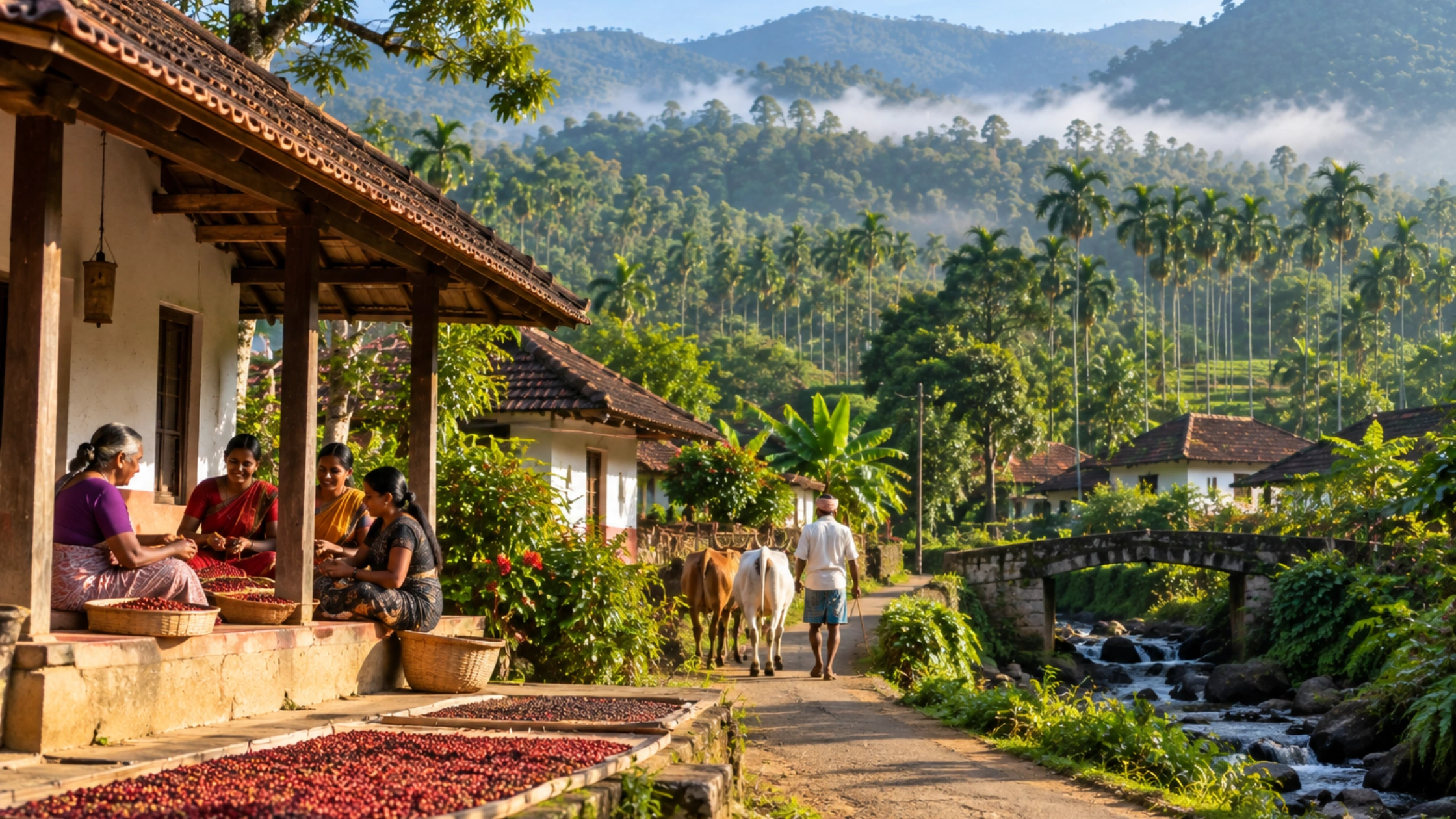
Strip away the brochure language and a Sakleshpur village experience is mostly about being present while ordinary work happens. Coffee doesn’t pick itself. Pepper vines need climbing. Cattle get milked at hours you’d rather be asleep. Sitting with a family while that goes on, occasionally being handed a job you’re bad at, is the whole activity.
The villages along the roads towards Heggade, Hanbal and the Bisle Ghat stretch are small, often twenty to sixty households, each holding a few acres of coffee, some pepper trained up silver oak, maybe arecanut in wetter pockets. Nobody farms at an industrial scale, so you can walk from your bedroom to a drying yard in under a minute.
What you won’t find is a curated film set. Roofs are Mangalore tile or plain tin, and there’s usually a satellite dish and a scooter under the jackfruit tree. Local life in Sakleshpur is modern in the ways that matter to the people living it, and accepting that separates a real visit from an awkward performance.
Sakleshpur Local Culture Through the Farming Year
The calendar here is set by rain and coffee, not by public holidays. Understanding that cycle stops you booking the wrong month.
Monsoon: June to September
Between June and late September the Ghats take a beating. Streams run brown and loud, estate paths turn slick, leeches come out in numbers, and washed clothes stop drying. It’s also the emptiest the region gets. If you can accept permanently damp socks, monsoon shows you Sakleshpur local culture at its most inward: tools repaired, endless coffee, long conversations while everyone watches the sky.
Harvest: November to February
This is when the villages get busy. Arabica picking generally runs from late November into January, with pepper stripping overlapping. Labour arrives, drying yards fill, and evenings smell of wet parchment. For a visitor it’s the richest window, because you see work rather than a description of work.
Summer: March to May
Warm by hill standards, quiet and cheaper. The one thing worth timing is coffee blossom, usually late March or April after the first pre-monsoon showers, when whole slopes turn white and smell like jasmine for roughly three days. Estate owners themselves only get about a week’s notice from the weather.
Food and the Table: A Malnad Village Experience
Malnad cooking is distinct from coastal Mangalorean food and from the drier plains cuisine further east. It leans on what grows in a wet, forested belt and is generous with coconut, tamarind and freshly ground masala. A Sakleshpur village experience is often remembered through its meals.
What lands on the plate
- Akki rotti with a fierce chutney pudi at breakfast, patted flat on a tawa with onion and coriander worked in.
- Kadubu, steamed rice dumplings, usually paired with a thin coconut saru.
- Bamboo shoot and jackfruit dishes in season, including a pickle that is an acquired taste.
- Filter coffee from beans grown within sight of the house, roasted in small batches.
Why it tastes the way it does
Rain shapes the pantry. With four months of heavy weather, preserving matters, so pickles, sun-dried chillies and salted mango sit in most kitchens. Meals in aMalnad village experiencefollow field timing: heavy breakfast around eight, lunch carried out to the estate, a lighter dinner once the light goes.
Homestays Near Sakleshpur Villages: Picking the Right Base
The word homestay gets used loosely, so ask what’s actually on offer before you pay.
| Type of stay | What it’s really like | Indicative tariff per night | Suits |
| Family homestay | Rooms in the family house, shared meals | Rs 1,800 to Rs 3,500 for two, meals included | Travellers who want conversation |
| Estate cottage | Private unit inside a working plantation | Rs 3,500 to Rs 7,000 for two | Couples and small families |
| Nature resort | Rooms plus activities, staff not hosts | Rs 4,000 to Rs 9,000 for two | Groups and offsites |
| Tented camp | Shared washrooms, bonfire, basic | Rs 1,200 to Rs 2,500 per head | Budget trips |
Those numbers move sharply with season. Expect a jump of 30 to 50 percent around Christmas, New Year and long weekends. The most genuine homestays near Sakleshpur villages often have the weakest websites, so a phone call tells you more than a listing photo ever will.
Rural Tourism in Sakleshpur: A Two-Day Plan That Works
- Day one, late morning: arrive, eat, then take a slow estate walk with whoever is free. Ask about the shade trees, not just the coffee.
- Day one, afternoon: a nearby village and a small temple, or the weekly market if timing lines up.
- Day one, evening: watch pulping or drying if it’s harvest season, then eat early.
- Day two, morning: an early walk to a stream or ridge before the mist lifts.
- Day two, afternoon: Manjarabad Fort on the way out, or Bisle Ghat if you have daylight left.
Two nights is the minimum for rural tourism in Sakleshpur to feel like more than a hotel stay, because one night gets eaten by driving.
Planning Your Sakleshpur Village Experience: Costs and Travel
Sakleshpur sits roughly 220 to 240 km from Bengaluru, usually five to six hours by road via Hassan, longer if you leave after 7 am on a Friday. The last stretch to most villages is single-lane and patchy after monsoon, uncomfortable in a low-clearance car. Trains reach Sakleshpur station and buses run to the town, but the final few kilometres need a pickup arranged by your host.
Budget realistically. A Sakleshpur village experience for two over two nights, including fuel, stay, meals and a guided walk, generally lands between Rs 9,000 and Rs 18,000. Carry cash, because coverage inside estates is patchy.
How to Be a Good Guest
Ask before photographing people, particularly women working in the fields. Remove footwear where the household does, and don’t bargain hard with a family charging you for home-cooked meals. Alcohol is welcome in some stays and not others, so check. The best part of a Sakleshpur village experience usually arrives unscheduled, over a second coffee, when nobody is performing hospitality.
Frequently Asked Questions
Is a Sakleshpur village experience good for families with young kids?
Yes, with sensible expectations. Children enjoy the animals, streams and space to run. Avoid peak monsoon with toddlers, since paths are slippery and leeches upset most kids. Pick a stay with an attached bathroom and keep walking for around two hours.
When is the best time for rural tourism in Sakleshpur?
November to February is the strongest window: dry mornings, harvest activity and comfortable walking weather. September and October give you deep green landscapes with less rain than the peak. March to May stays quiet and affordable. June to August suits people who genuinely enjoy relentless rain.
Do I need to speak Kannada to enjoy local life in Sakleshpur?
It helps, but it isn’t essential. Most hosts manage Hindi or English well enough, and younger family members translate happily. Learning five or six words, especially thanks and good, changes the tone of every conversation. Older villagers may speak only Kannada, so patience matters more than vocabulary.
How far ahead should I book a Sakleshpur village experience?
For weekends between November and January, four to six weeks ahead is sensible, and longer around New Year. Off-season midweek stays can often be arranged a few days out. Smaller family-run places have two or three rooms in total, so they fill quickly.
Conclusion
A Sakleshpur village experience rewards patience more than planning. The coffee is good whatever month you visit, but what you carry home depends on the unstructured time you leave yourself: the hour watching parchment get raked, the walk that turned into a conversation about crop prices, the meal where you finally asked what was in the pickle. Streamedge Sakleshpur can be a comfortable base for travellers who want to experience the natural surroundings of Sakleshpur at a relaxed pace. Two nights, a stay chosen for its people rather than its photographs, and a willingness to get muddy will do more than any itinerary. Plan your Sakleshpur village experience around harvest if you can, and slow right down once you arrive. Streamedge Sakleshpur can also be considered when you want to combine your village exploration with a comfortable stay.
Planning your Sakleshpur village getaway?Contact Streamedge Sakleshpur to check stay availability, booking options and suitable arrangements for your travel dates.
Follow us on Instagram for more Sakleshpur travel inspiration, local experiences, resort updates and getaway ideas.


