You’ve booked a couple of nights at Streamedge Sakleshpur in coffee country, and someone in the group says the temple is “just down the ghat”. They’re half right. The drive from Sakleshpur to Kukke Subramanya is short on paper and slow in practice, because the two sensible ways down cross very different kinds of road. Get the choice right and you’re at the temple in two hours with a river stop on the way. Get it wrong and you’re crawling behind a lorry in fog, or bouncing through a forest track with no signal and a fuel gauge you’re now watching closely. Planning your route from Streamedge Sakleshpur before leaving can make the journey smoother and help you choose the road that best suits your group and vehicle.
Sakleshpur to Kukke Subramanya: choosing your route
There isn’t one obvious road. The Sakleshpur to Kukke Subramanya route splits almost immediately into a forest option and a highway option, and they suit different vehicles, seasons and tolerances for rough tarmac.
Via Bisle Ghat (the short, scenic one)
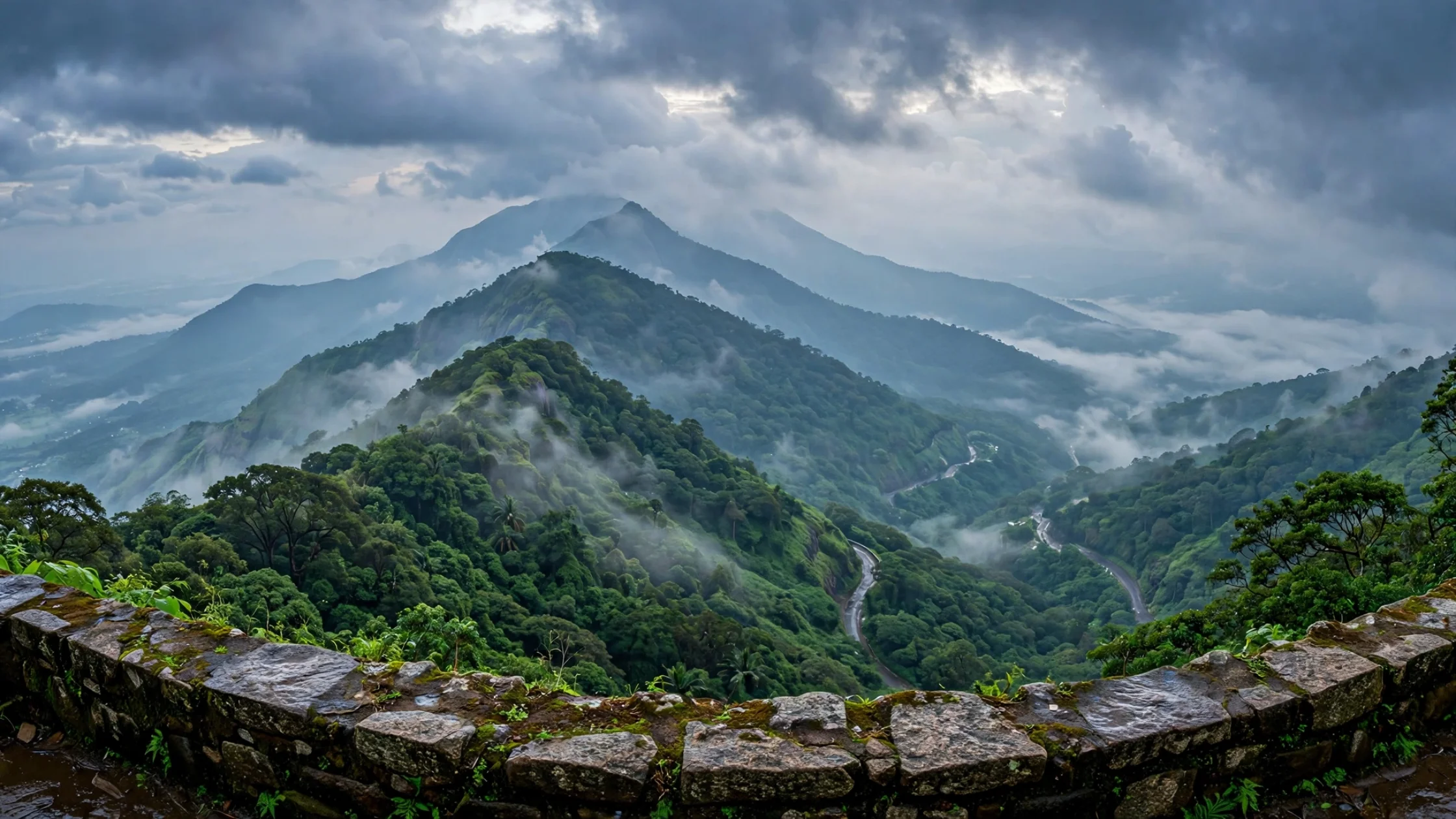
Bisle Ghat drops you through reserve forest past the Bisle viewpoint, one of the better panoramas in these hills, with three ridge lines stacked behind each other on a clear morning. It’s the shorter Sakleshpur to Kukke Subramanya route by a wide margin, roughly 65 to 75 km depending on where in Sakleshpur you start.
The trade-off is surface quality. Sections are single-lane with broken edges, and after heavy rain you’ll meet mud, fallen branches and the odd small landslip. No fuel pump inside the forest belt, patchy mobile coverage, little traffic if something goes wrong. Fill the tank first.
Via NH75 and Gundya (the safe, boring one)
The alternative runs down Shiradi Ghat on NH75 towards Mangaluru, then turns off near Gundya for the temple road. It’s longer, around 100 to 115 km, but it’s proper highway for most of it and you’re never far from a tyre shop, a tea stall or another vehicle.
Shiradi Ghat has its own character. Truck traffic is heavy, and monsoon fog can cut visibility to a few car lengths. Still, in July, this is what most local drivers pick without much debate.
| Factor | Bisle Ghat route | NH75 / Gundya route |
| Approx. distance | 65–75 km | 100–115 km |
| Typical driving time | 2 to 2.5 hours | 2.5 to 3 hours |
| Road surface | Patchy, single-lane in parts | Mostly highway, some repair zones |
| Best season | November to May | Any, including monsoon |
| Fuel and help en route | Very limited | Regular |
| Suits | Small groups, SUVs, daylight runs | Families, sedans, early or late travel |
Sakleshpur to Kukke distance, timing and road conditions
The honest answer on Sakleshpur to Kukke distance is that it depends entirely on which road you take, and map apps will happily send you down Bisle without mentioning what it looks like in August. Plan on two hours as a floor and three as a realistic ceiling.
Timing matters more than distance. Leave by 6.30am for cool ghat air, thin traffic and a shot at morning darshan before the queue thickens. Leave at 10am on a Saturday and you’ll share the temple town with several busloads. Returning the same day, be back on the ghat before dark.
Travel options if you’re not driving yourself
Not everyone wants to take a car down a ghat road. There are several workable ways to make the trip without driving yourself.
• Hired car with driver: the most common choice. A day trip typically runs in the low thousands of rupees depending on vehicle size and waiting time, and a local driver picks the route based on that morning’s conditions.
• KSRTC and private buses: services run from Sakleshpur towards Subramanya, usually via the highway. Cheap, slower, and tied to a timetable that may not match temple queues.
• Train: Subrahmanya Road station sits on the Bengaluru–Mangaluru line, a short auto ride from the temple. Handy if you’re arriving from outside the region rather than hopping across.
• Two-wheeler: fine in dry months for confident riders, unwise on Bisle in monsoon.
With elderly parents or small children along, the hired car via NH75 is the low-drama option, and worth the extra hour.
Places to stop on the Sakleshpur to Kukke Subramanya drive
Bisle viewpoint is the obvious stop, best in early light before the valley hazes over. Further down, the Kumaradhara river crossings give you somewhere to stretch, and in drier months the rocks along the bank suit a packed breakfast.
On the NH75 side, Gundya has roadside eateries serving genuinely good coastal food, and it’s the last comfortable meal stop before the temple road. Neriya and the estate villages around it are worth ten minutes if you like watching areca and pepper handled at scale.
Places to visit near Kukke Subramanya
Don’t treat the temple as the whole trip. Among the places to visit near Kukke Subramanya, the Kumaradhara river ghat is the closest and busiest, since many pilgrims bathe there before darshan. Adi Subramanya and Biladwara, both a short distance from the main shrine, are quieter and carry the older layer of the site’s story.
Kumara Parvatha starts here too, and it’s one of Karnataka’s tougher treks rather than a casual walk, so treat it as a separate trip with permits and an early start. Dharmasthala sits about an hour further on if you’re building a temple circuit. Other places to visit near Kukke Subramanya include the small estate viewpoints on the road back up, which most day-trippers drive straight past.
Where to base yourself for a Sakleshpur to Kukke Subramanya trip
Most people run the temple trip as an out-and-back from the hills rather than staying in the temple town, which has simple lodging geared to pilgrims. Stays near Sakleshpur for temple trips tend to be estate properties set among coffee and pepper, so you get cool nights, proper food and a base for the rest of the trip.
Check three things before booking stays near Sakleshpur for temple trips: whether early breakfast is possible for a 6.30am start, whether they can arrange a driver who knows both ghats, and how rough the estate access track gets in rain.
Building a two-day Sakleshpur travel itinerary
A workable Sakleshpur travel itinerary looks like this. Day one, arrive by afternoon, walk the estate, drive up to Manjarabad Fort for sunset, eat early. Day two, leave at dawn for Sakleshpur to Kukke Subramanya, return by mid-afternoon, keep the evening free.
With three days, slot the Green Route rail trek or a guided estate walk into day two and push the temple run to day three. A Sakleshpur travel itinerary built around one big drive per day, not two, is the difference between a holiday and a logistics exercise.
Frequently Asked Questions
How long does the Sakleshpur to Kukke Subramanya drive take?
Budget two to three hours each way. Bisle Ghat is shorter but slower per kilometre because of road surface and blind bends. The NH75 route via Gundya covers more ground at a higher average speed. Add 30 to 45 minutes in monsoon, and more if you’re stopping for breakfast.
Is Bisle Ghat safe during the monsoon?
It’s passable most days but not the route to pick if you’re unsure. Rain brings mud, falling branches, occasional small slips and leeches at any stop. Mobile coverage is poor and help is far away. In June to September, most local drivers take the highway instead, and that’s sound advice.
Can I visit the temple as a day trip from Sakleshpur?
Yes, and plenty of people do. Leave by 6.30am, allow a couple of hours at the temple including the queue, and you’ll be back by mid-afternoon. Check current darshan timings and special pooja days first, since crowds vary enormously between an ordinary weekday and a festival.
What should I carry on the Sakleshpur to Kukke Subramanya trip?
Cash for the temple and small shops, a change of clothes if you plan to bathe in the Kumaradhara, modest clothing for darshan, and salt or repellent for leeches in the wet months. Keep the fuel tank full, carry water, and download offline maps before you lose signal.
Conclusion
The Sakleshpur to Kukke Subramanya run is one of those short trips that goes badly only when it’s planned casually. Pick your route by season rather than map distance, leave early enough to beat both the queue and the afternoon rain, and give yourself one proper stop instead of three rushed ones. In dry months, Bisle Ghat is the better drive; from June to September, the highway is the better decision, even though it costs you an hour. Done properly, it’s a half-day outing with a river, a forest and a genuinely old temple in it, and you’re back at Streamedge Sakleshpur before the light goes.
If you’re weighing up routes, timings or where to base yourself for the trip, speaking with an experienced local team is the fastest way to get answers matched to your dates and your vehicle. Streamedge Sakleshpur can also help you plan a comfortable stay around your Sakleshpur itinerary.
Follow us on Instagram for more Sakleshpur ideas.


