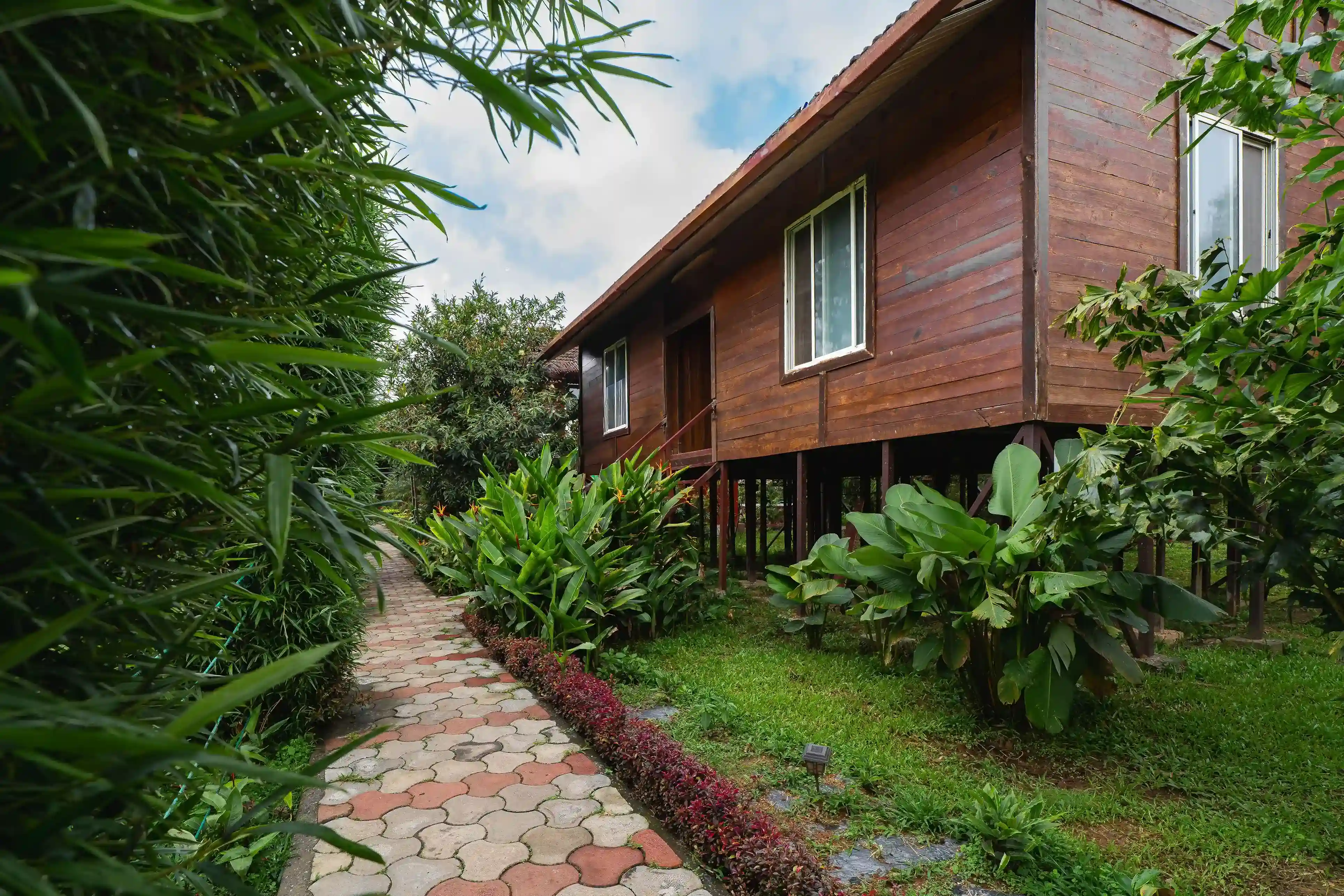
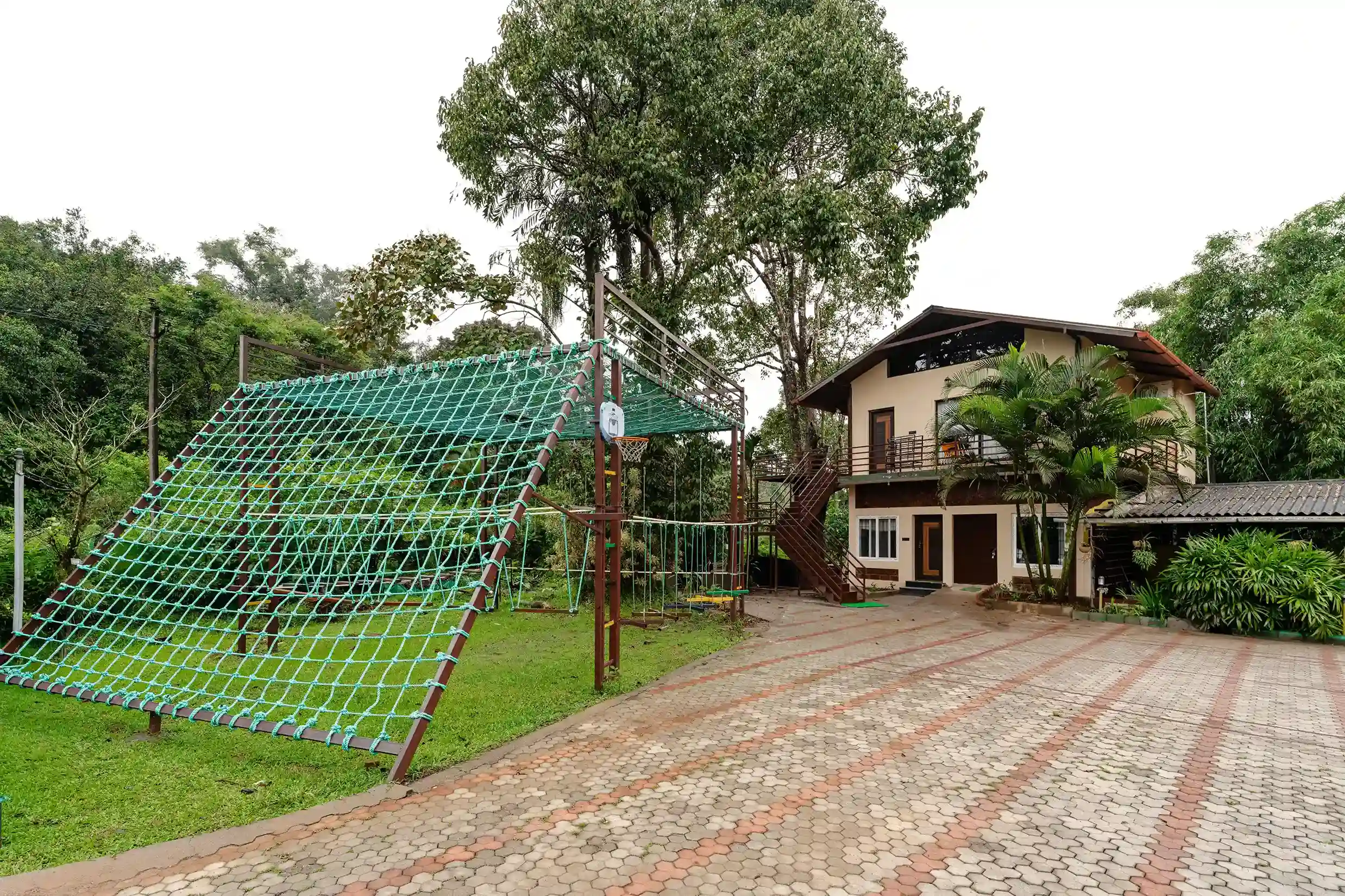
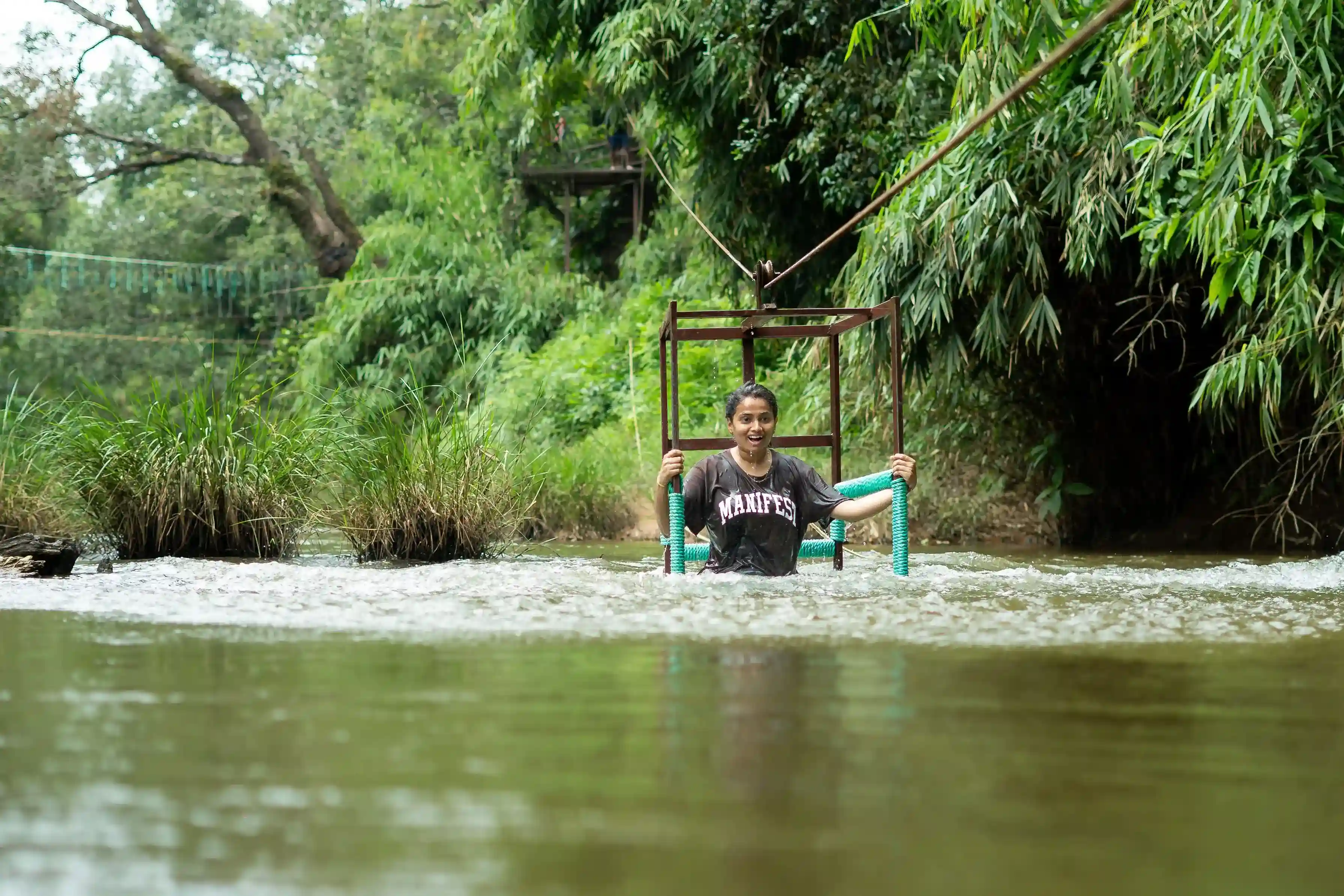
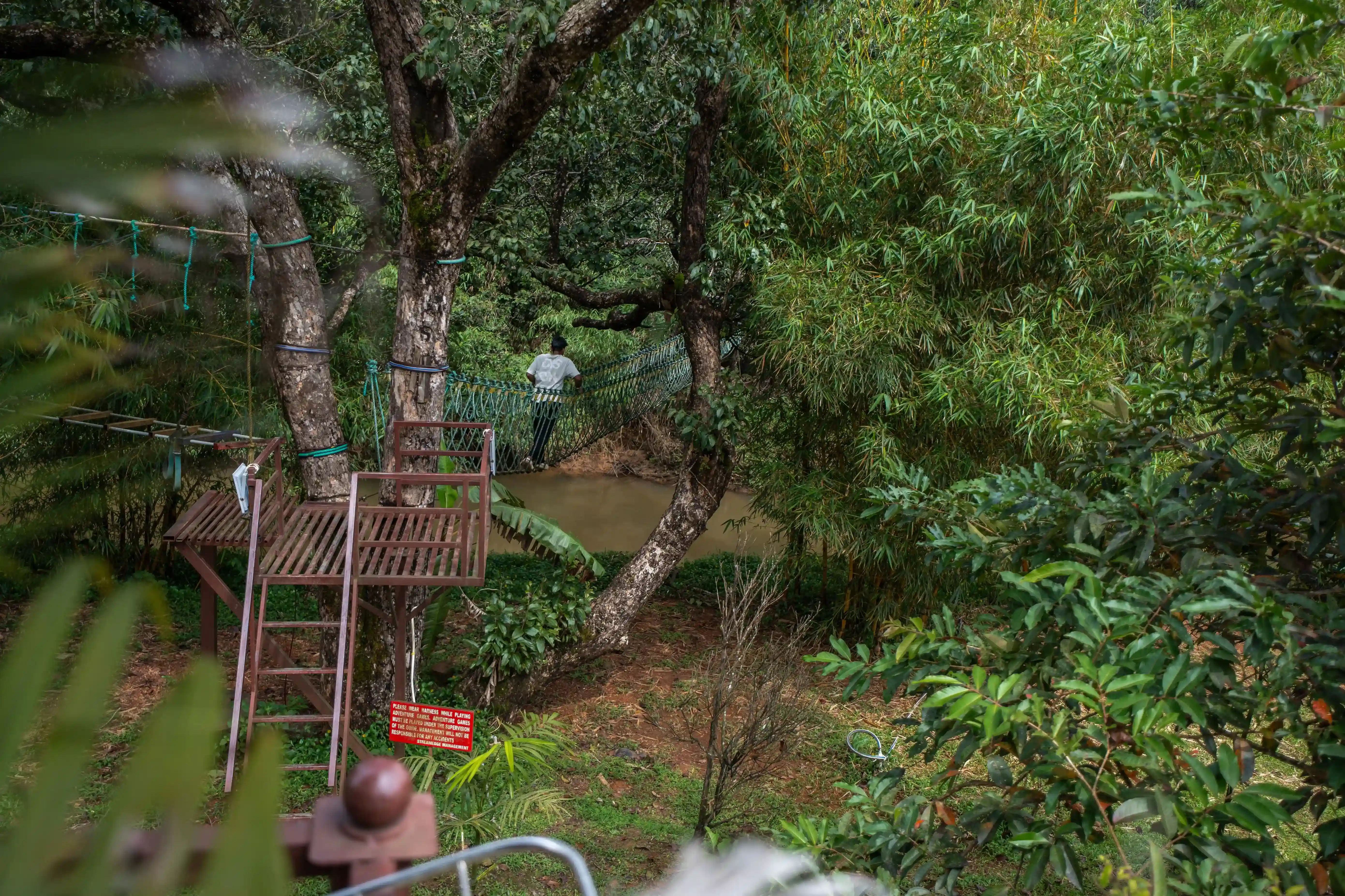
The last twenty minutes are the ones people remember. You've been walking through coffee shade and then open grass, and suddenly the slope steepens onto bare rock, the wind picks up hard, and the whole ridge line of Hassan district opens out behind you. That's the Jenukal Gudda trek in a single moment. Streamedge Sakleshpur can be considered as a convenient stay option when planning a trek in the region, while Streamedge Sakleshpur provides a comfortable base to relax before or after exploring the surrounding hills.
It's also a climb that gets underestimated. On paper it's a short half-day walk. In practice the last section is exposed, the grass hides loose stone, and weather turns faster here than most visitors from Bengaluru expect. Plan it properly and it's one of the finest walks in Malnad. Wing it and you'll be the group turning back at eleven.

What Makes the Jenukal Gudda Trek Worth Doing
Jenukal roughly translates as honey rock, after the wild combs that hang off the cliff faces. The summit is among the higher points in Hassan district, sitting somewhere above 4,000 feet, and unlike most walks in this belt it finishes in open shola grassland rather than dense canopy. That matters. You get a real view at the top instead of a clearing.
The other draw is variety. One climb takes you through working coffee and pepper plantation, patchy forest, then bare windswept ridge. Few short treks in Karnataka hand you three landscapes in under three hours.
Jenukal Gudda Sakleshpur: Where It Is and Getting to the Base
The peak sits roughly 25 to 35 km from Sakleshpur town depending on the approach, in the Hethur and Kabbinale direction. Road access ends well before the trail does.
- From Bengaluru: around 240 km, five and a half to six hours to Sakleshpur, plus another hour on estate roads.
- From Mangaluru: about 140 km via Shiradi Ghat, then the same inland stretch.
- Last leg: single-lane approach roads, unmarked in places, rough after heavy rain. Ground clearance helps in monsoon.
Much of the surrounding land is privately held estate, and the trailhead isn't a signposted tourist entry. Directions labelled Jenukal Gudda Sakleshpur on map apps tend to drop you in the general area rather than at the start of the path. Arrange a local guide in advance, both for permission and because the grassland carries several faint trails and only one of them is right.
The Route: What the Climb Actually Looks Like
A realistic Jenukal Gudda trekking guide splits the walk into three stages, and each feels completely different underfoot.
Stage one: estate track
The first stretch follows a jeep track through coffee, arecanut and pepper, shaded nearly the whole way. Gradient is gentle. This is where groups make good time and burn energy they'll want later. Roughly 45 minutes to an hour.
Stage two: the grassland shoulder
Tree cover thins and the trail climbs onto rolling grass. Underfoot it's uneven, often hiding loose rock and small drainage cuts. Sun exposure begins here, and so does the wind. Another 45 minutes or so.
Stage three: the summit rocks
The final push is short, steep and rocky, with sections where you'll use your hands. It isn't technical, but wet rock changes everything. Allow 20 to 30 minutes, and take the descent slowly, which is when most twisted ankles happen.
Difficulty, Distance and Fitness
The Jenukal Gudda trek sits squarely in moderate territory, with one genuinely demanding section at the end.
| Factor | What to expect |
| One-way distance | Roughly 4 to 6 km depending on approach |
| Total time | 4 to 6 hours including breaks and descent |
| Difficulty | Moderate; the summit rocks push it up a notch |
| Elevation gain | A few hundred metres, mostly in the second half |
| Suitable for | Fit adults, teenagers, older children with support |
If you can walk five kilometres uphill without stopping constantly, you'll manage. Anyone with knee trouble or a fear of exposed edges should think hard about the summit push, and there's no shame in stopping at the grassland shoulder, where the view is already excellent.
Best Time for Jenukal Gudda Trek
The best time for Jenukal Gudda trek attempts runs roughly October to February, and visibility matters as much as comfort here.
- June to September: dramatic, waterlogged, often zero visibility up top. Leeches are constant, and many guides simply decline.
- October to February: the window. Clear mornings, firm ground, comfortable temperatures.
- March to May: dry and walkable, but hazy by mid-morning and hot on exposed slopes. Start by 6 am.
Start early whatever the season. Cloud builds from late morning, and a summit reached at eight is a different mountain from one reached at noon.
Safety Tips That Actually Matter
Mobile signal is unreliable on the grassland and often absent on the ridge, so tell someone your plan before you leave. Most trouble on the Jenukal Gudda trek comes down to footing and timing rather than fitness.
Weather and footing
Rock that grips beautifully when dry becomes dangerous with mist on it. If cloud rolls in during your ascent, stopping where you are beats pushing for a summit you won't see anyway. Wear trail shoes with tread, not running sneakers.
Leeches, wildlife and heat
Through and around monsoon, leeches are guaranteed on the shaded lower sections. Carry salt or spray, tuck trousers into socks, check at every break. Elephants move through parts of this landscape, which is another reason a guide isn't optional. Carry two litres of water per person minimum; there's nothing to drink on the way up.
What to Carry
- Trail shoes with real grip, already broken in.
- Two litres of water, plus electrolytes in summer.
- A windproof layer. The ridge runs much cooler than the base.
- Salt or anti-leech spray in the wet months.
- A small first-aid kit with crepe bandage and antiseptic.
- Packed food, and a bag to carry every wrapper back down.
Other Trekking Places in Sakleshpur
If you're building a two-day itinerary, the other trekking places in Sakleshpur pair neatly with this climb. Agni Gudda is far shorter and works as a warm-up or sunset walk. Bisle Ghat is a drive rather than a trek but delivers the region's biggest view. Manjarabad Fort adds history in under an hour. Estate walks and waterfall trails fill the gaps, and permissions on the old rail route change, so check locally first.
Where to Stay: Resorts Near Jenukal Gudda
Most resorts near Jenukal Gudda actually sit closer to Sakleshpur town or scattered through the estates, meaning 45 minutes to an hour of driving to reach the trailhead. Factor that in when you set a 5.30 am start.
Indicative tariffs run around ₹2,500 to ₹4,500 a night for estate homestays, ₹5,000 to ₹9,000 for mid-range resorts with pools and activities, and higher for private cottages. Ask whether the property arranges guides and packed breakfasts, because a trek day falls apart when the kitchen opens at eight.
Frequently Asked Questions
How difficult is the Jenukal Gudda trek for beginners?
Moderate rather than hard. A first-timer with reasonable fitness handles the estate and grassland sections comfortably. The final rocky stretch is where beginners struggle, particularly coming down. Go with a guide, start early, and treat the grassland shoulder as a perfectly good turnaround point if the summit feels beyond you.
Do you need a guide for the Jenukal Gudda trek?
Strongly recommended. Sections cross private estate land where permission matters, the grassland carries several faint paths, and elephant movement in the area is real. A local guide also reads the weather far better than any app will. Most stays around Sakleshpur can arrange one with a day's notice.
Can you camp at the summit?
Camping and night trekking are restricted across much of this landscape, and rules shift with the season and with forest department directions. Don't assume it's allowed. Check with your host or a local guide before planning an overnight, and treat this as a day walk unless you have clear confirmation otherwise.
How long does the Jenukal Gudda trek take?
Budget four to six hours in total, including breaks and the descent. Fit groups moving steadily finish faster; mixed-ability groups with children take longer. Add an hour of driving each way from most stays, so a 5.30 am departure gets you back for a late lunch without rushing.
Conclusion
The Jenukal Gudda trek rewards preparation more than raw fitness. Get the season right, start before sunrise, wear shoes that grip, and bring a guide who knows the estate boundaries. Do that and the climb becomes one of the most satisfying half-days available in the Western Ghats. Skip it and you'll spend the morning staring at cloud from a slippery rock. Use this Jenukal Gudda trekking guide as a planning baseline, then confirm current trail access locally, since conditions and permissions shift through the year.
If you're planning your trek and need a convenient place to stay before or after exploring the trail, contact Streamedge Sakleshpur to discuss your preferred dates, accommodation needs and group requirements. The team can help you explore suitable stay options for your Sakleshpur itinerary. For more ideas on nearby experiences, resort activities and seasonal travel inspiration, follow Streamedge Sakleshpur on Instagram and stay connected before your next getaway.