At six in the morning on an estate track, before the labour arrives, you can hear four or five species calling at once without moving your feet. That is the argument for birdwatching in Sakleshpur in a single sentence. The Western Ghats endemics are here, the access is easy compared to deeper forest, and you don’t need a permit to stand quietly on a coffee road. Streamedge Sakleshpur offers a nature-focused base for travellers interested in exploring the region’s birdlife, while Streamedge Sakleshpur can be considered when planning a comfortable stay alongside your birdwatching trip.
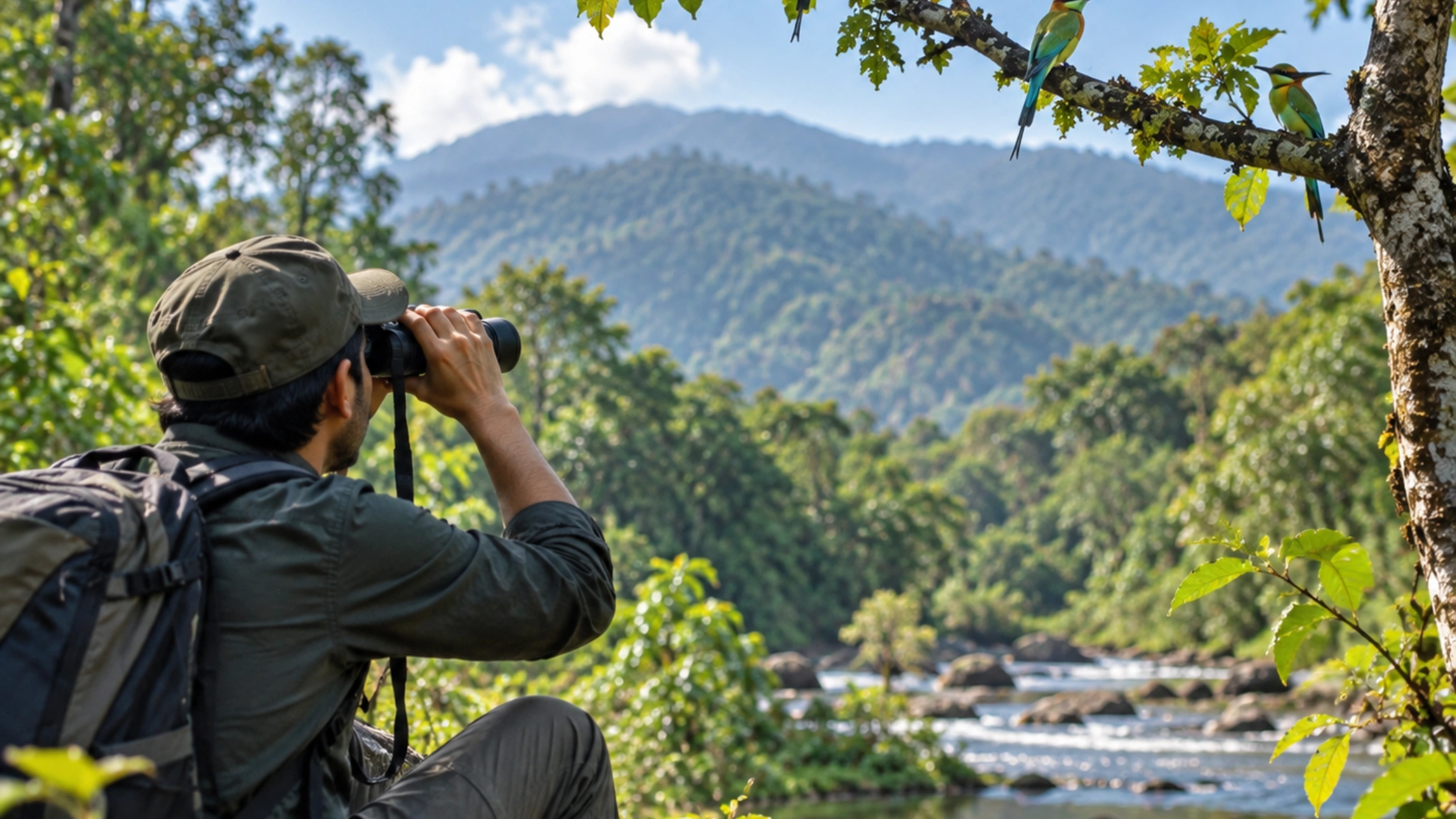
Why Birdwatching in Sakleshpur Works So Well
The reason is structural. Shade-grown coffee keeps a canopy of old silver oak, jackfruit and native trees over most of the district’s farmland, so the shift from forest to cultivation is soft rather than abrupt. Birds that need canopy use estate shade trees. Birds that need undergrowth find it along stream margins and neglected boundaries.
Add elevation, roughly 900 metres on the plateau dropping steeply towards Bisle, and you get several altitudinal bands within a short drive. That’s why a seriousSakleshpur wildlife experiencecan produce plateau species in the morning and lower-elevation ones by lunchtime, without covering much ground. Very little else this close to a major city allows that.
The Habitats That Hold Birds
Shade coffee and estate edges
Your most productive habitat for birdwatching in Sakleshpur, and the easiest to access. Mixed flocks move through the shade trees mid-morning, and fruiting figs pull in barbets, hornbills and pigeons for days at a time.
Evergreen forest patches
Denser, darker, harder work. The sought-after species sit here, including Malabar trogon and Sri Lanka frogmouth in the right pockets. You’ll hear far more than you see, so learn calls first.
Streams, tanks and open ground
Water changes everything. Malabar whistling thrush along running streams, kingfishers and wagtails at slower stretches, raptors over open ground. Even a small estate tank rewards twenty patient minutes.
Birds in Sakleshpur: What You Can Realistically Expect
Manage expectations and you’ll enjoy it more. On a well-planned two-day trip in the right season, 60 to 90 species is a fair outcome for an attentive birder, and a hundred is possible with a good guide and some luck.
| Group | Examples you’re likely to encounter | Where to look |
| Western Ghats endemics | Malabar parakeet, white-cheeked barbet, crimson-backed sunbird, Malabar grey hornbill | Estate canopy, forest edge |
| Forest specialists | Malabar trogon, grey junglefowl, emerald dove, racket-tailed drongo | Interior evergreen patches |
| Water-associated | Malabar whistling thrush, river tern, common kingfisher, grey wagtail | Streams and tanks |
| Winter migrants | Indian pitta, brown-breasted flycatcher, forest wagtail, Blyth’s reed warbler | Undergrowth, October to March |
Some of the most memorablebirds in Sakleshpurare not rarities at all. A great hornbill crossing a valley at eye level, or a whistling thrush singing through mist at first light, outranks most things ticked off a list.
Best Times for Birdwatching in Sakleshpur
Season shapes everything, and getting it wrong is the commonest mistake visitors make.
- October to March is the strongest window for birdwatching in Sakleshpur. Migrants are in, the weather cooperates, and mornings stay clear long enough to work a patch properly.
- February to April brings peak breeding activity among residents: singing males, display flights, easier identification by call.
- June to September is hard going. Heavy rain, poor light, leeches everywhere. Some birders come anyway for frogs and atmosphere.
- Late April and May are hot and quiet, though fruiting trees concentrate birds impressively.
Within any day, the first three hours after sunrise carry most of the activity, with a second burst in the last ninety minutes of light. Midday birdwatching in Sakleshpur is mostly a matter of finding a fruiting tree and waiting beside it.
Bird Watching Places in Sakleshpur and the Wider Belt
- Estate roads around your stay, walked slowly at dawn. The highest return for effort.
- The Bisle Ghat road, dropping through denser forest, good for hornbills, raptors and lower-elevation species.
- Manjarabad Fort surrounds, where open hilltop and scrub edge produce a different set from the estates.
- Stream valleys and small reservoirs, particularly early and late in the day.
- Higher slopes towards Pushpagiri, for anyone willing to trek properly.
Most productivebird watching places in Sakleshpur are on private land, so permission matters. The better birding spots near Sakleshpur are rarely marked on any map, which is exactly why a local guide changes your trip.
Gear and Field Craft
Birdwatching in Sakleshpur needs less kit than the internet suggests, but what you carry should suit wet, dim conditions.
- Binoculars in the 8x42 range. Better in low forest light than 10x, and steadier when you’re breathing hard after a climb.
- Rain protection for optics. A cover and a lens cloth save a morning.
- Muted clothing and quiet footwear. Bright colours and rustling jackets cost you sightings.
- An offline call reference. Coverage dies inside estates, so download recordings and a field guide first.
Technique matters more than kit. Walk half the distance you planned, stop three times as often, and stand still where two habitats meet. Most people walk straight past their best bird because they were still moving.
Responsible Birding in the Ghats
Playback deserves a firm line. Recorded calls stress birds during breeding season, and in popular spots the same bird gets hit repeatedly. Use it rarely, briefly, or not at all, and never for nesting or threatened species.
Keep to paths where they exist, don’t cut vegetation for a clearer photograph, and stay away from active nests. Ask before entering private land and accept a refusal gracefully. Elephants move through parts of this landscape, so take local advice about which valleys to avoid on foot. A responsible Sakleshpur wildlife experience is one the estate owner is happy to repeat for the next visitor.
Nature Stays for Birdwatching: Choosing a Base
Where you sleep affects your list more than any other decision, because the best hour for birdwatching in Sakleshpur is the one immediately outside your door.
| Stay type | Indicative rate per night, two adults | Birding value |
| Estate homestay | Rs 2,000 to Rs 3,500 with meals | High, if the property has old shade trees |
| Plantation cottage | Rs 4,000 to Rs 7,500 | High, usually quieter and more private |
| Larger resort | Rs 5,500 to Rs 12,000 | Variable, depends on landscaping versus real habitat |
When comparingnature stays for birdwatching, ask three things: how far the nearest forest patch is on foot, whether a flask and early breakfast can be arranged for a 6 am start, and whether anyone on staff knows the local birds. That last question separates a useful base from a merely pretty one.
Frequently Asked Questions
Is birdwatching in Sakleshpur suitable for beginners?
Very much so. Estate roads are flat, walkable and full of visible species like barbets, bulbuls and drongos that build your confidence quickly. Start with a guided morning to learn the common calls, then walk on your own afterwards. A basic pair of binoculars is plenty for a first trip.
How many days should I plan for a birding trip?
Two nights suits most people, giving two full mornings and an evening session. Three nights lets you add a lower-elevation trip towards Bisle Ghat for species you won’t find on the plateau. Day trips from Bengaluru rarely work for birdwatching in Sakleshpur, since the drive eats the only hours worth having.
Do I need a guide to find birding spots near Sakleshpur?
Not strictly, but it helps enormously on a first visit. Local guides know which estates allow access, where fruiting trees are active that week, and which call belongs to which species. Half a day usually costs a few hundred to a couple of thousand rupees, depending on the arrangement.
Can I combine birding with a family holiday?
Yes, and it’s a common arrangement. Birders take the 6 am to 9 am window while everyone else sleeps, then rejoin for breakfast, waterfalls and estate walks. Choose a stay with pleasant grounds so non-birders have somewhere comfortable while you’re out with binoculars.
Conclusion
Birdwatching in Sakleshpur is less about chasing rarities than about the quality of an ordinary morning. Stand at the edge of a coffee estate in November, let the mist lift, and the list builds itself while you’re still on your first cup of coffee. Streamedge Sakleshpur can provide a comfortable base for enjoying the natural surroundings while keeping your birdwatching plans relaxed. Pick the season carefully, base yourself somewhere with a real habitat rather than lawn, walk slowly, and take the ethics seriously, because this landscape is worked and lived in as well as watched. Get those four right and even a short trip produces birds you’ll remember for years afterwards. Streamedge Sakleshpur can also be considered when you want to combine birdwatching with a peaceful Sakleshpur stay.
Planning a birdwatching getaway? Contact Streamedge Sakleshpurto check stay availability, booking options and suitable arrangements for your preferred dates.
Follow us on Instagram for more Sakleshpur nature experiences, birdwatching inspiration, resort updates and travel ideas.


