Most people arrive in Sakleshpur wanting a hill they can climb before breakfast. Something short enough that a seven-year-old and a grandparent can both come along, but high enough that the view at the top actually justifies getting up in the dark. The Agni Gudda trek is that hill, which is exactly why it fills up on weekends. For travellers planning their stay around the trek, Streamedge Sakleshpur offers a convenient base for exploring the surrounding attractions, while Streamedge Sakleshpur also makes it easy to combine the trek with a relaxed resort stay.
It sits close to town, takes well under an hour to climb, and delivers a genuine 360-degree sweep across estates, ridge lines and the old railway alignment. There's a catch though. The final section is bare rock, and in the wet months that changes the entire character of the walk.
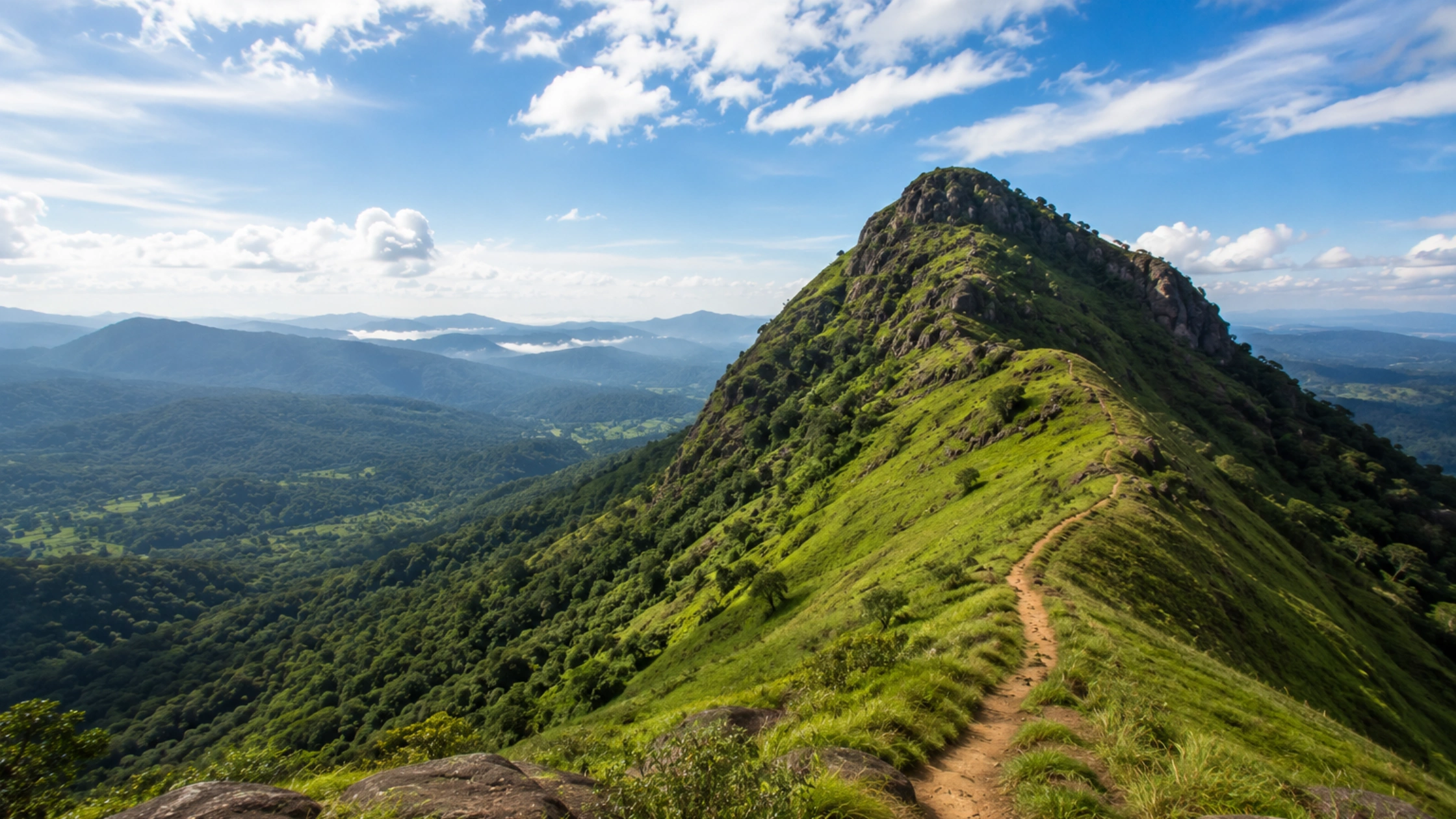
Why the Agni Gudda Trek Suits Almost Everyone
Length is the whole point. The climb runs somewhere between one and two kilometres, with most groups reaching the top in 30 to 50 minutes at an unhurried pace. Compare that to the region's bigger summits, which eat half a day, and you see why families, first-timers and anyone on a tight itinerary end up here.
The reward is disproportionate to the effort. From the top you look down on Sakleshpur town on one side and unbroken green ridge on the other, with coffee estates stepping away below. On a clear December morning the layered hills run further than most photographs capture.
Agni Gudda Sakleshpur: Location and How to Reach
The Agni Gudda trek starts just a few kilometres from Sakleshpur town, unusual for a viewpoint of this quality. Anyone searching Agni Gudda Sakleshpur online finds slightly different starting points, because more than one approach path exists and locals use them interchangeably.
- From Sakleshpur town: roughly 4 to 6 km depending on the approach. Ten to fifteen minutes by car or auto.
- From Bengaluru: about 220 to 230 km, five to six hours via Hassan on NH-75.
- From Mangaluru: around 130 km up Shiradi Ghat.
Parking near the base is informal rather than organised, and the final stretch of road is narrow. Weekends and holidays get congested, so an early arrival solves two problems at once.
The Agni Gudda Trek Trail: What to Expect
The lower path
The first section runs through scrub, grass and patches of plantation. Gently graded, wide enough to walk two abreast in most places, easy to follow. Nothing demands technique. Loose gravel is the only nuisance, and it's worse on the way down.
The rocky final stretch
Then the trail hits rock. The last portion is a bare sloping face where you scramble rather than walk, and some approaches have basic assistance in place. Dry, it's straightforward and mildly fun. Wet, it's slick and unforgiving, and this is where the walk stops being family-friendly. Coming down takes longer than going up.
Difficulty and Who It Works For
| Factor | What to expect |
| Climb time | 30 to 50 minutes up, 25 to 40 down |
| Distance | Roughly 1 to 2 km one way |
| Difficulty | Easy overall, with one short scramble |
| Best for | Families, beginners, sunrise and sunset walkers |
| Not ideal for | Anyone uneasy on rock, or on very wet days |
Honest assessment: the Agni Gudda trek is a beginner climb with one grown-up section. Children who scramble confidently will enjoy it. Older relatives may prefer to stop just below the final face, where the view is already very good. Nobody needs technical gear.
Timing Your Agni Gudda Trek: Sunrise, Sunset and Season
Sunrise or sunset?
Sunrise gets you cool air, thinner crowds and a chance of cloud sitting in the valleys, which is the best thing this hill does. Sunset gets warmer light and a busier summit. If you can only do one, go at dawn and carry a torch.
Season by season
- October to February: the strongest window. Clear air, green slopes, comfortable temperatures, dry rock.
- March to May: perfectly walkable but hazy after mid-morning and hot on the exposed upper section. Go at first light.
- June to September: spectacular greenery, frequent whiteouts, slippery rock and leeches on the lower path. Attempt it only in a clear spell, and skip the scramble if the rock is wet.
What to Carry and Trail Etiquette
Agni Gudda trekking needs less kit than most Ghats walks, but skip these and you'll notice:
- Shoes with grip. This is the one non-negotiable item.
- A litre of water per person, more in summer.
- A torch or headlamp for pre-dawn starts.
- Salt or anti-leech spray during and just after monsoon.
- A light windproof layer; the summit is breezier than the base.
- A bag for your own waste. The hill has no bins and it shows.
Two things worth saying plainly. Loudspeakers ruin the summit for everyone else, and standing on the rock edge for a photograph is how accidents happen. Avoid the climb during lightning; there's no shelter on the upper slope.
Combining It With Other Trekking Near Sakleshpur
The hill works best as part of a weekend rather than the whole reason for it. If you're planning trekking near Sakleshpur across two or three days, a sensible sequence runs: the Agni Gudda trek at sunrise on day one, Manjarabad Fort mid-morning, a waterfall after lunch. Keep day two for something longer such as Jenukal Gudda.
Bisle Ghat viewpoint is a drive rather than a walk, roughly 60 km out, and delivers the widest view in this part of the Western Ghats. Access to the old rail route has been restricted at times, so check current rules locally rather than trusting old blog posts.
Sakleshpur Adventure Activities Beyond the Hill
With Agni Gudda trekking done by eight, the day is open. Common Sakleshpur adventure activities include guided estate walks through working coffee and pepper plantations, off-road jeep rides, zip lines and rope courses at resort properties, river crossings in drier months, and camping where permitted. Cycling the quieter estate roads is underrated, particularly post-monsoon when surfaces have dried but the hills stay green.
Pricing varies. Short activities often sit in the few hundred rupees range per person, while organised packages and jeep safaris run higher. Most properties bundle some activities into the tariff and bill others separately, so ask before booking.
Where to Stay: Resorts Near Agni Gudda
Because the hill sits close to town, the choice of resorts near Agni Gudda is wider than for the remoter peaks. Estate homestays typically run around ₹2,500 to ₹4,500 a night, mid-range resorts with pools and activity packages ₹5,000 to ₹9,000, and private cottages higher still, shifting with season, meal plan and group size.
If sunrise is the plan, two questions matter more than the pool photos: how far is the property from the base, and will someone hand you a flask before 5.30 am. For groups, confirm road access for a tempo traveller and whether generator backup exists, since wet-season power cuts are routine.
Frequently Asked Questions
1. How long does the Agni Gudda trek take?
Most people take 30 to 50 minutes to reach the top and a little less coming down, though the rocky final stretch slows the descent. Including time at the summit for photographs and a breather, budget around two hours from parking back to parking. Families with small children should allow longer.
2. Is the Agni Gudda trek safe for children and older people?
The lower path suits both groups comfortably. The final rock scramble is the deciding factor: confident children handle it fine with an adult alongside, while anyone unsteady on their feet is better off stopping just below it. Avoid the climb entirely when the rock is wet, regardless of who's in the group.
3. Do you need a guide for the Agni Gudda trek?
Not usually. The trail is short, well used and hard to lose in daylight. That said, a pre-dawn start in unfamiliar terrain is easier with someone who knows the path, and several stays around Sakleshpur send a guide on request. In monsoon, local advice on conditions is worth having.
4. What's the best month to visit?
November through February gives the most reliable combination of clear views, dry rock and pleasant temperatures. October is greener but cloudier. March to May works if you start at first light. Monsoon months are beautiful and genuinely unpredictable, with a real chance of seeing nothing but mist from the top.
Conclusion
The Agni Gudda trek earns its popularity honestly. It's short, it's close to town, and the view from the top belongs on a much harder climb. Treat the rocky final section with respect, pick a dry morning between November and February, carry proper shoes and a torch, and it becomes the easiest highlight of a Sakleshpur weekend. Pair it with a longer walk, a waterfall and an estate morning, and two days feel properly used.
Planning to explore Agni Gudda and other Sakleshpur attractions during your stay? Contact Streamedge Sakleshpur to check accommodation options, availability and stay arrangements that suit your travel plans. For more Sakleshpur travel inspiration, resort experiences and nearby attractions, follow Streamedge Sakleshpur on Instagram and keep your next hill getaway planned. Streamedge Sakleshpur can be a convenient starting point for travellers looking to combine adventure, relaxation and local sightseeing in one Sakleshpur trip.


